
At the Café Table
A waiter wipes yesterday’s table before the first customer arrives. He does it slowly, without looking up, the way someone does a thing they have done ten thousand times before. Across the street, a shutter goes up. He is still wiping.
An elderly man arrives a few minutes later and takes the same chair he always takes, the one nearest the window, without checking whether it’s free. It always is, at this hour. He unfolds his newspaper before he has ordered anything at all.
The coffee, when it comes, is almost beside the point.
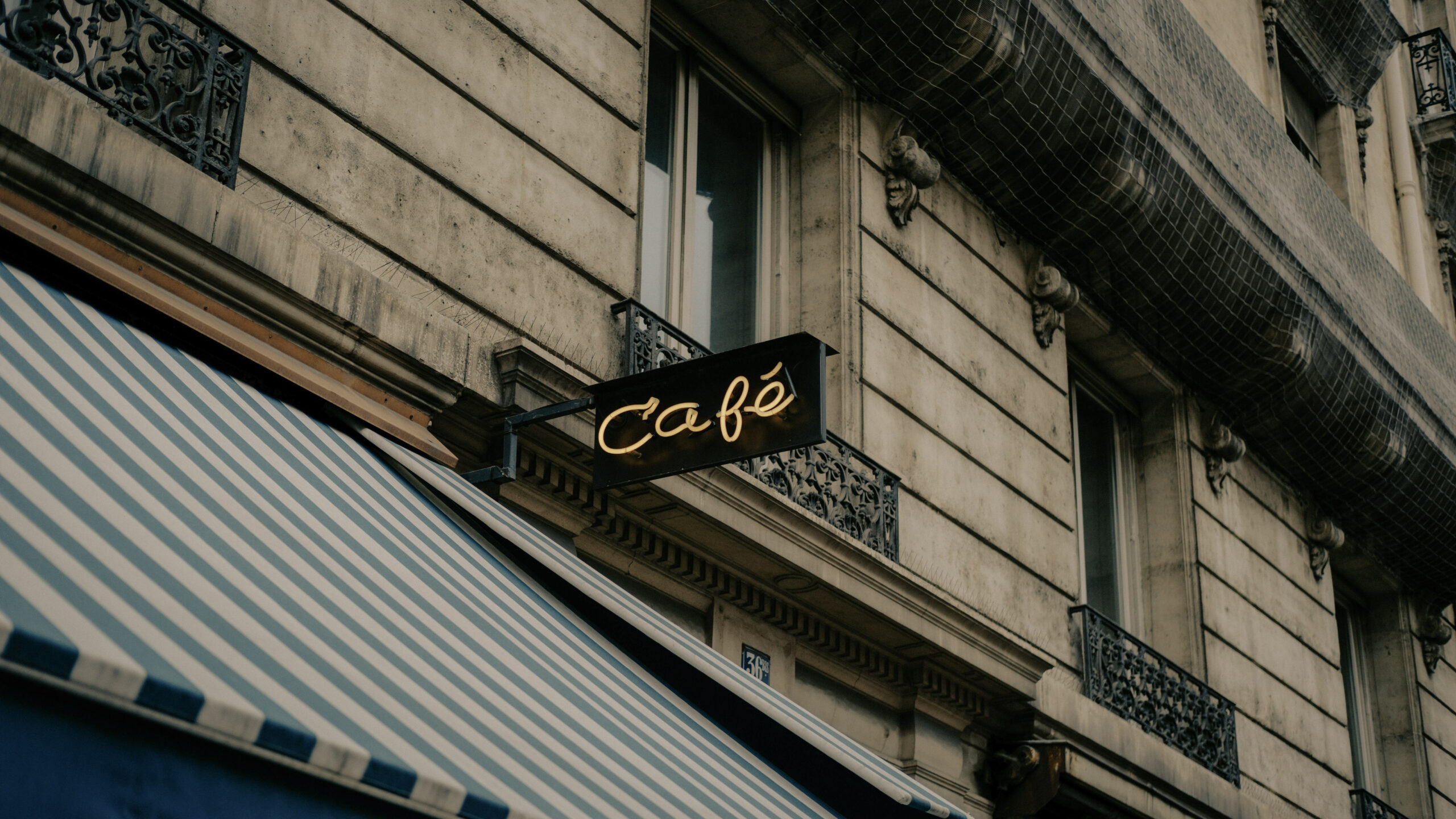
The sign appears before the aroma of coffee reaches the street.
The Table Before the Coffee
Ask someone in Lisbon or Turin or Vienna where they’re going for a coffee, and they will usually name a table before they name a drink. The corner one, by the door. The small round one that catches the afternoon sun. The one with the wobble that everyone knows to avoid.
The table is chosen first. The order comes after, almost as a formality — a small transaction that earns the right to stay.
For the length of one espresso, or three, a stranger holds a small corner of a public street as if it were their own. No one questions it. No one hovers nearby with a tray, waiting to reclaim the space. The chair, for now, belongs to whoever is sitting in it.
STUDIO VELA NOTE
The table is chosen before the coffee is. Most people never notice they’ve made a decision at all.
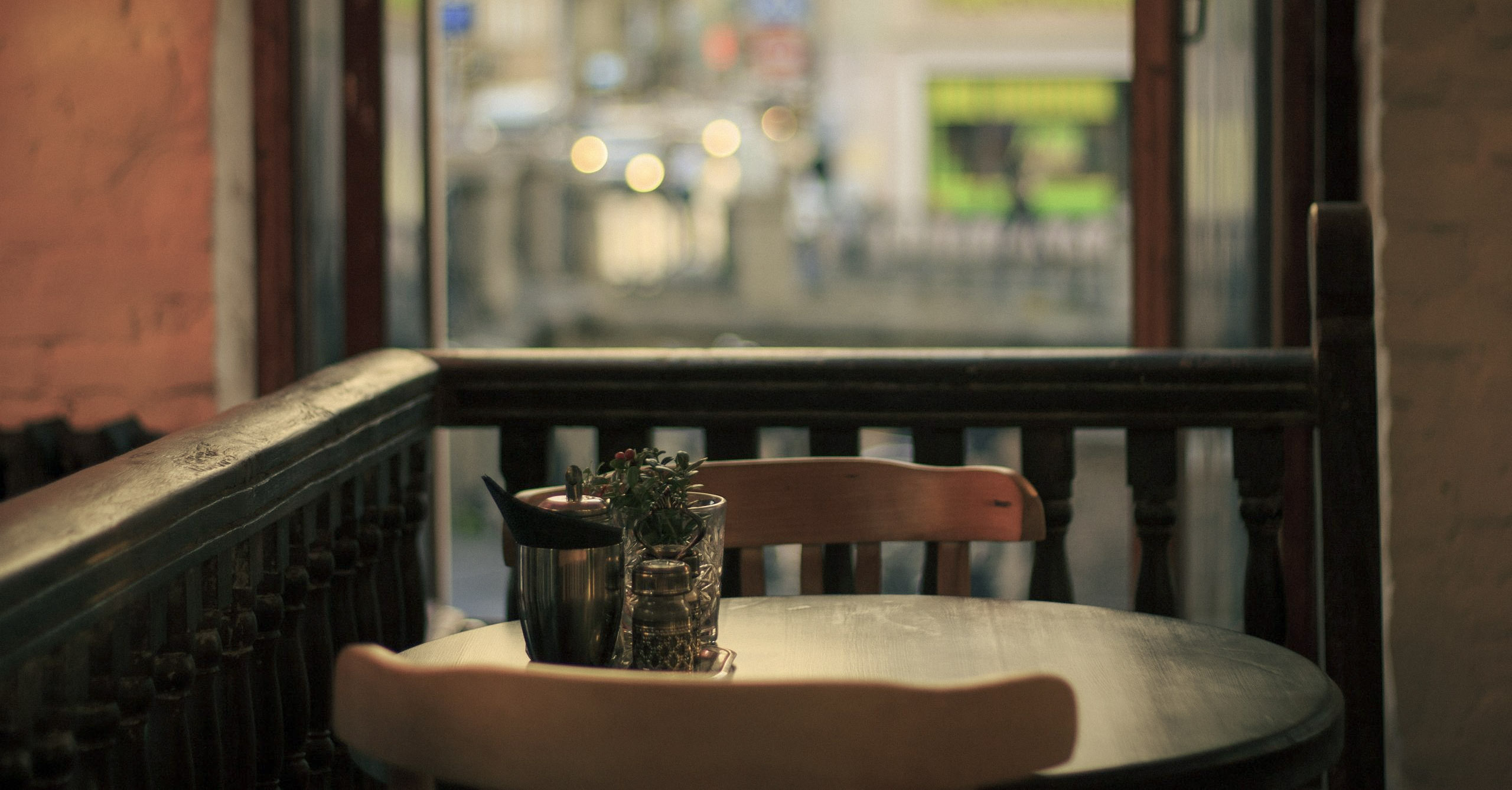
A table by the window, waiting long before anyone decides to sit down.
Learning to Stay
In many cafés, the check does not arrive until it is asked for. This is not an oversight. It is simply understood that finishing a drink and finishing a visit are two separate things.
A woman at a nearby table has long since emptied her cup. She is still there twenty minutes later, watching two men argue cheerfully about football at the next table over, not participating, not quite ignoring it either.
No one asks her to leave. No one refills her cup to signal it’s time to go. The table holds her the same way it held her coffee — without asking anything in return.
“No one asks how long you plan to stay. The table decides that on its own.”
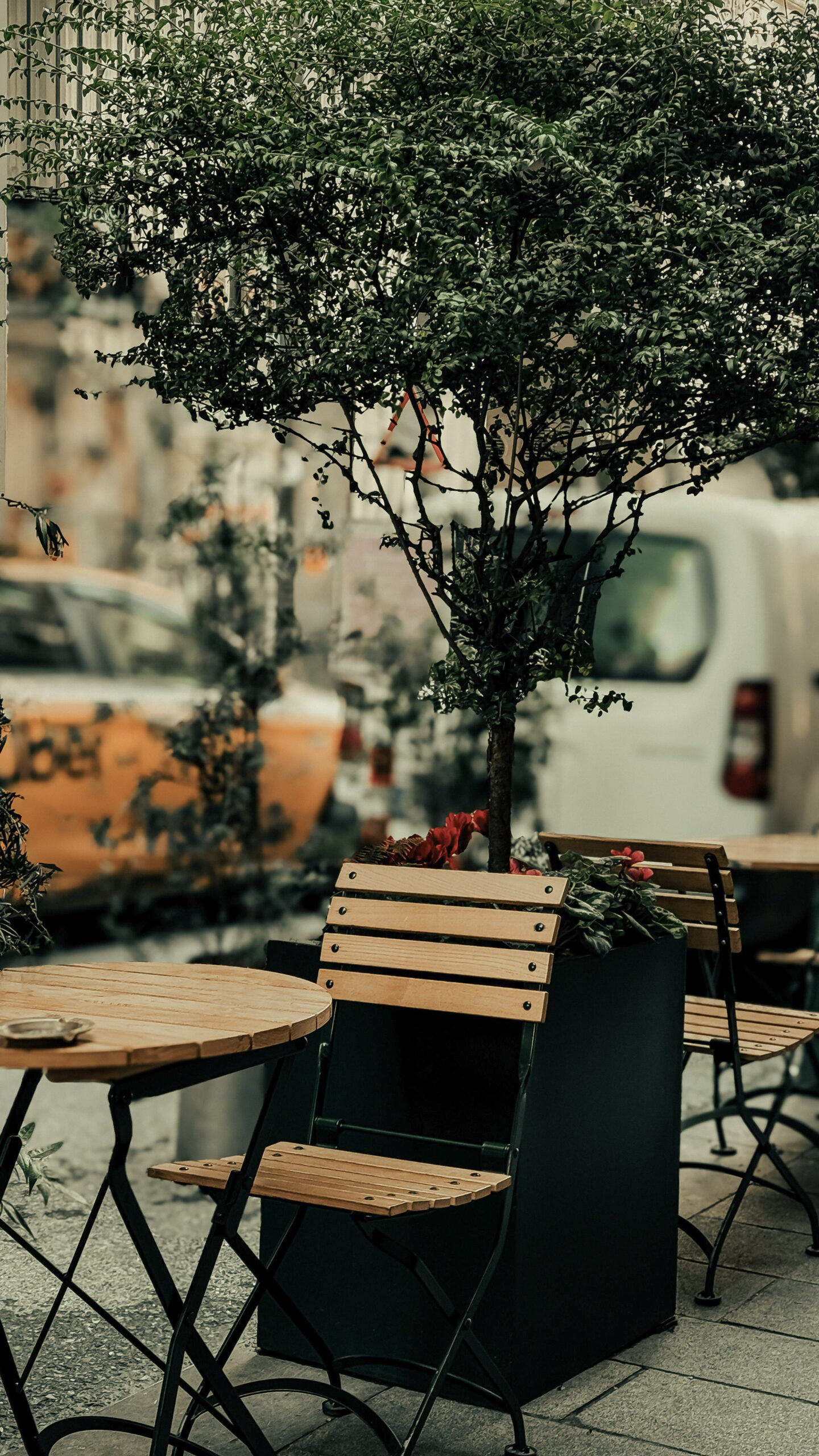
Some people choose a table for the sun.
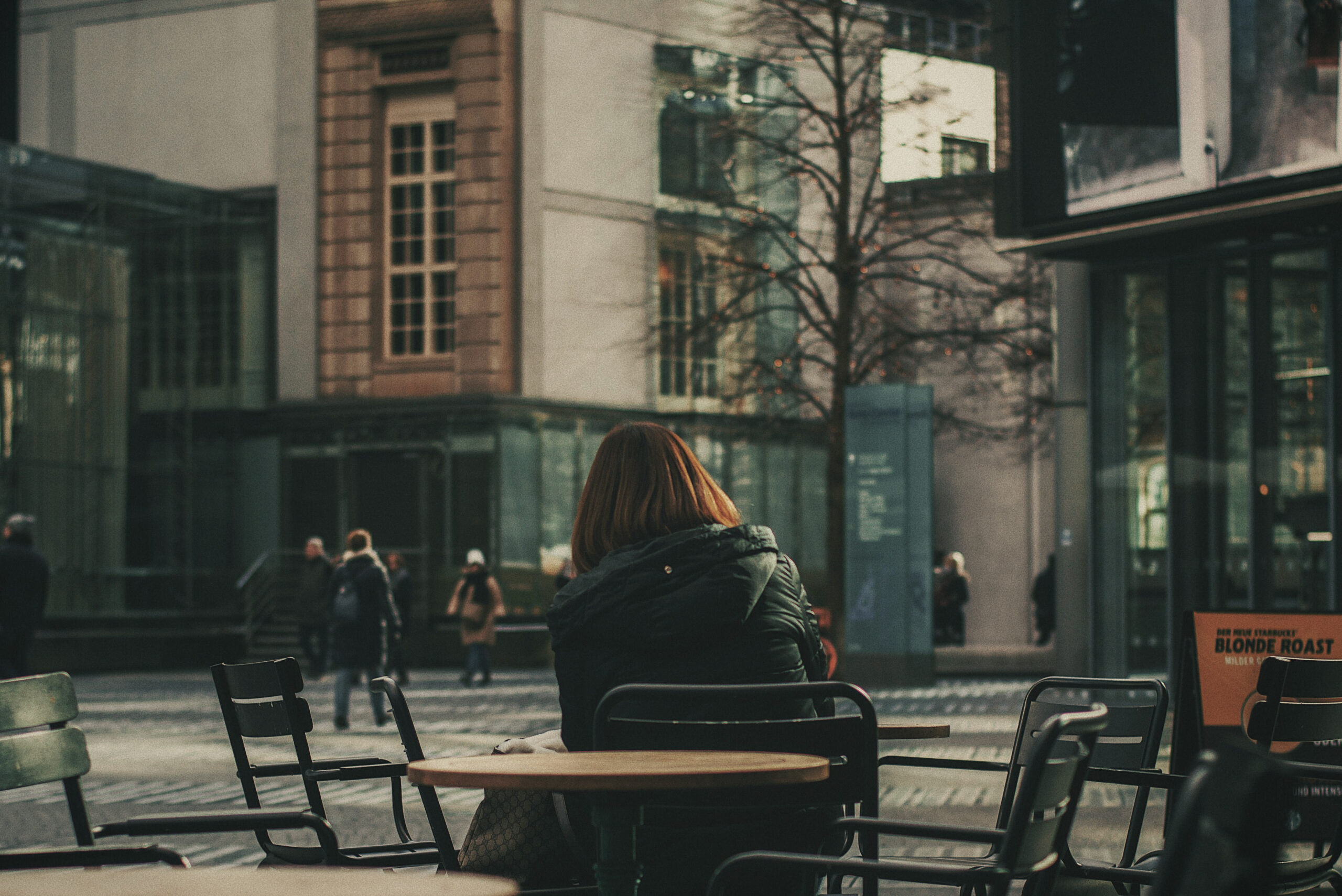
Others choose it for the view.
Watching the Street
After twenty minutes at a café table, a street starts to repeat itself in small ways.
The same bicycle passes twice — once toward the market, once back, a bag of bread now balanced in the basket. A florist steps outside to water the plants lined along her window, checks the sky, goes back in. Two neighbours meet by the corner, exchange a few words, and part again, neither one appearing to be in any particular hurry.
The light shifts from the flat white of morning to something more golden. A café table, it turns out, is one of the few places left where a person can watch an entire morning become an afternoon without doing anything at all.
Objects Left Behind
A ring of coffee, dried into the wood of the table. A folded newspaper, refolded so many times its creases have gone soft. A pair of reading glasses, forgotten and then remembered halfway down the block. A receipt, tucked under an empty cup, curling slightly at the edges by the time anyone clears it away.
None of them stays for very long. A waiter sweeps most of them away within minutes of a table emptying.
For a few minutes, the table still feels occupied.

Someone has already left. The morning has not.
Why Some Tables Are Remembered
Most café visits are forgotten within days. The coffee was fine. The chair was fine. Nothing about it asked to be kept.
But certain tables stay. Not the ones with the best view, or the best cup, but the ones where nothing in particular happened — a long, unhurried hour, a stranger’s conversation half-overheard, a street that carried on outside the window without needing anyone to watch it.
Ask most people, years later, and they will remember the table long before they remember what they ordered.
Studio Vela Reflection
The best café tables ask for nothing except a little more time.
Somewhere right now, a chair is being pulled slightly away from a table, angled just enough toward the street to make watching easier. A cup sits half-full, cooling, forgotten in favour of whatever is passing by outside. No one is checking the time.
A waiter walks past twice without stopping. The third time, he still doesn’t ask if everything’s alright. He already knows.
The newspaper, three pages in, stays folded on the table for a while longer.
-
At the Café Table
Read story → : At the Café TableThe coffee is almost beside the point. A quiet editorial essay about choosing a table, watching…
-
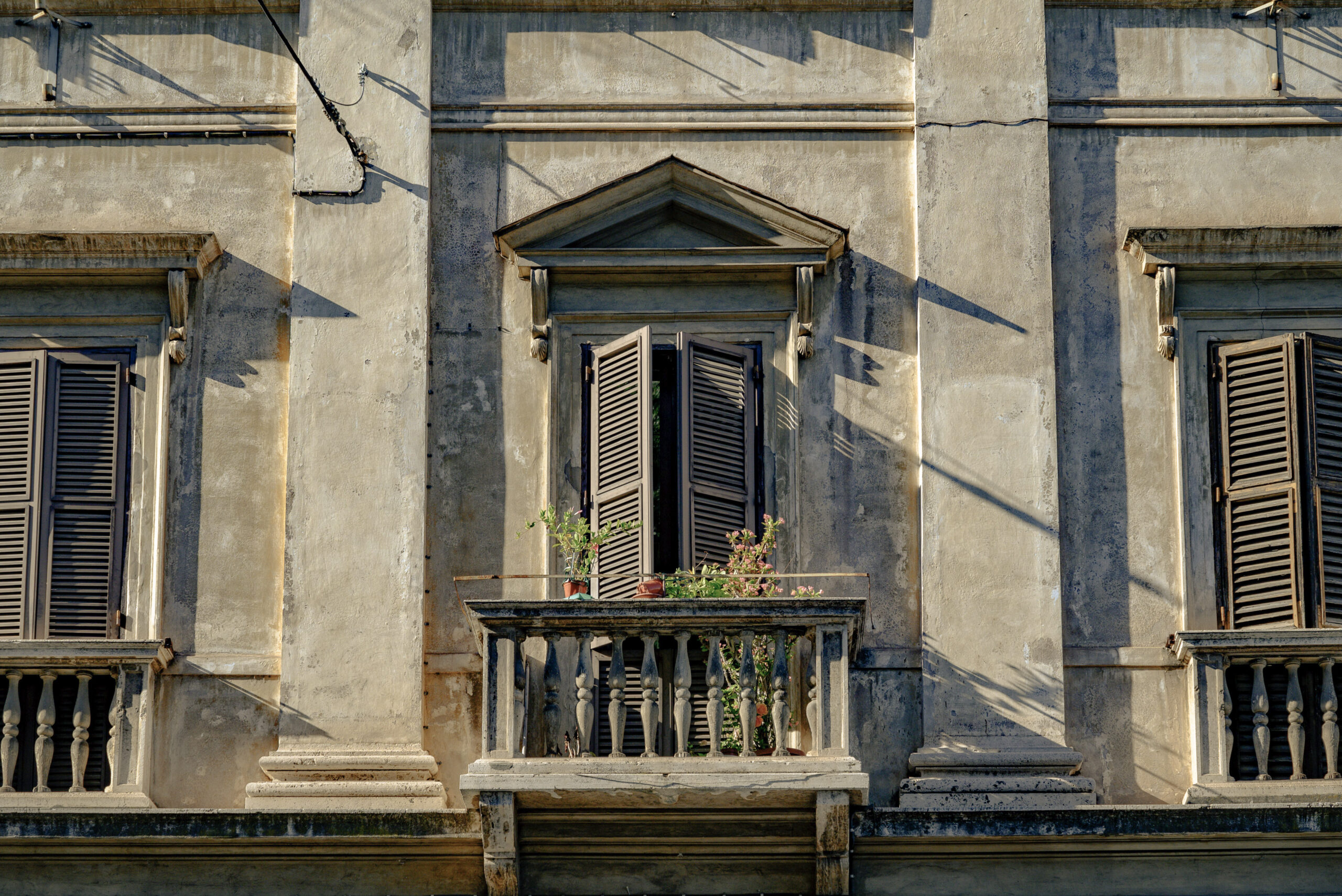
The Open Window
Read story → : The Open WindowEvery morning, the same window opens before the street is fully awake. A quiet observation on…