
The Quiet Streets of Europe
Just after sunrise, a side street in Parma begins to wake.
A baker unlocks a door that has opened at roughly the same hour for decades. Across the street, someone pushes open wooden shutters and leans out for a moment before disappearing inside again. A bicycle remains where it was left the night before. A small café is still empty, though the chairs have already been set outside.
Nothing here is designed to be noticed.
Yet these are often the streets people remember most.
Not the grand avenues. Not the famous squares. Not the places that appear on postcards.
The quiet streets of Europe leave a different kind of impression. They are not memorable because of what they show us. They are memorable because of what they quietly reveal about the people who live there.
A street, after all, is never just a collection of buildings.
It is a record of habits.
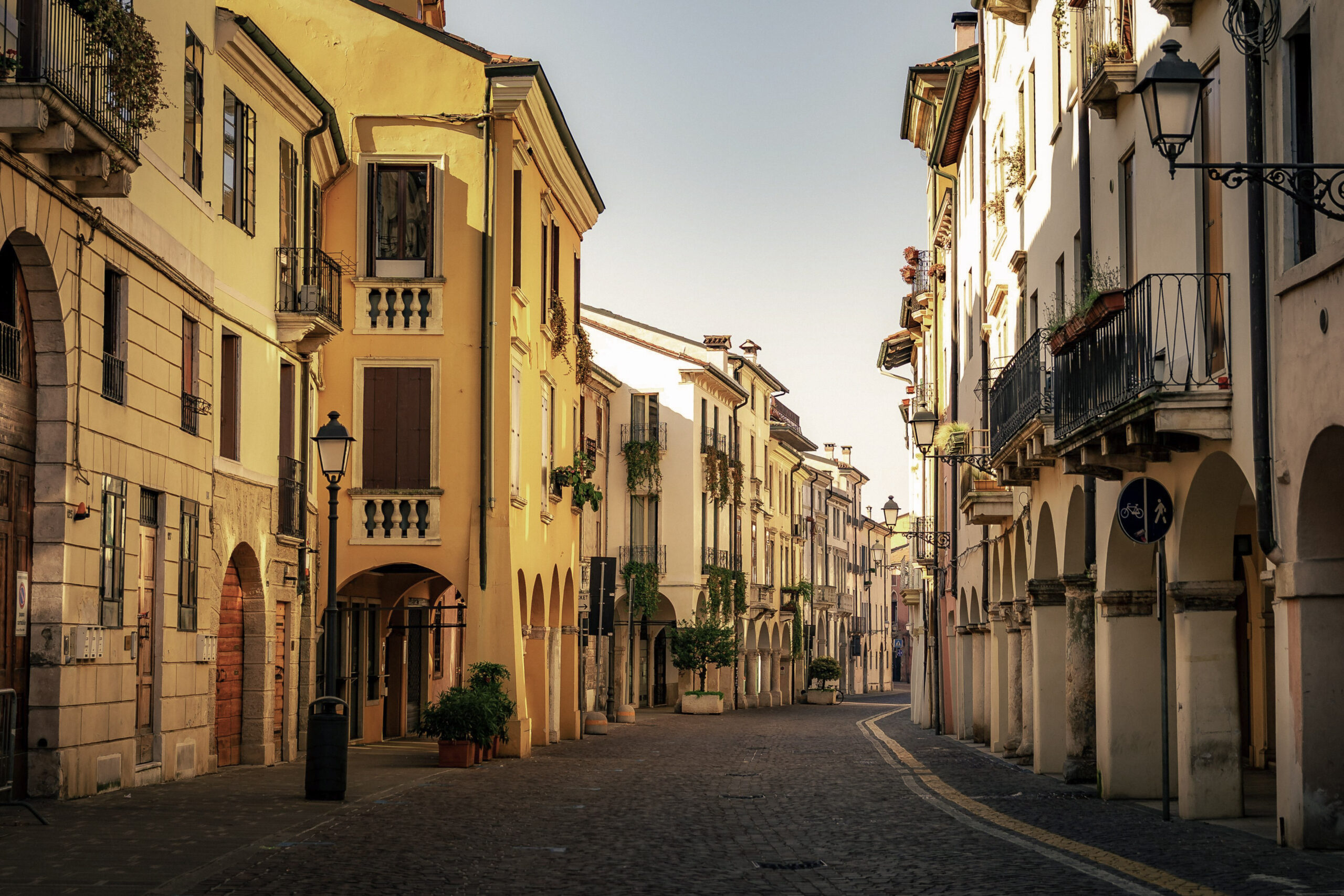
Morning light in Milan’s Brera district, where quiet streets reveal their charm.
The Places Where Daily Life Remains Visible
On a narrow street in Prague, a florist places buckets of flowers outside her shop before most people have finished breakfast. Further down the pavement, someone opens a window and shakes out a tablecloth. A customer stops to exchange a few familiar words on the way to work.
Many European streets were not designed around attractions. They were designed around daily routines. Shops open at street level. Apartments sit directly above them. Daily life unfolds within view.
A chair appears outside the shop each morning before opening time.
The same window is left open for an hour after breakfast.
The bicycle is still leaning against the same stone wall when the cafés begin to fill.
None of these details ask to be noticed.
Given enough time, you notice them anyway.
STUDIO VELA NOTE
The most revealing parts of a city are often the moments nobody planned for visitors to see.
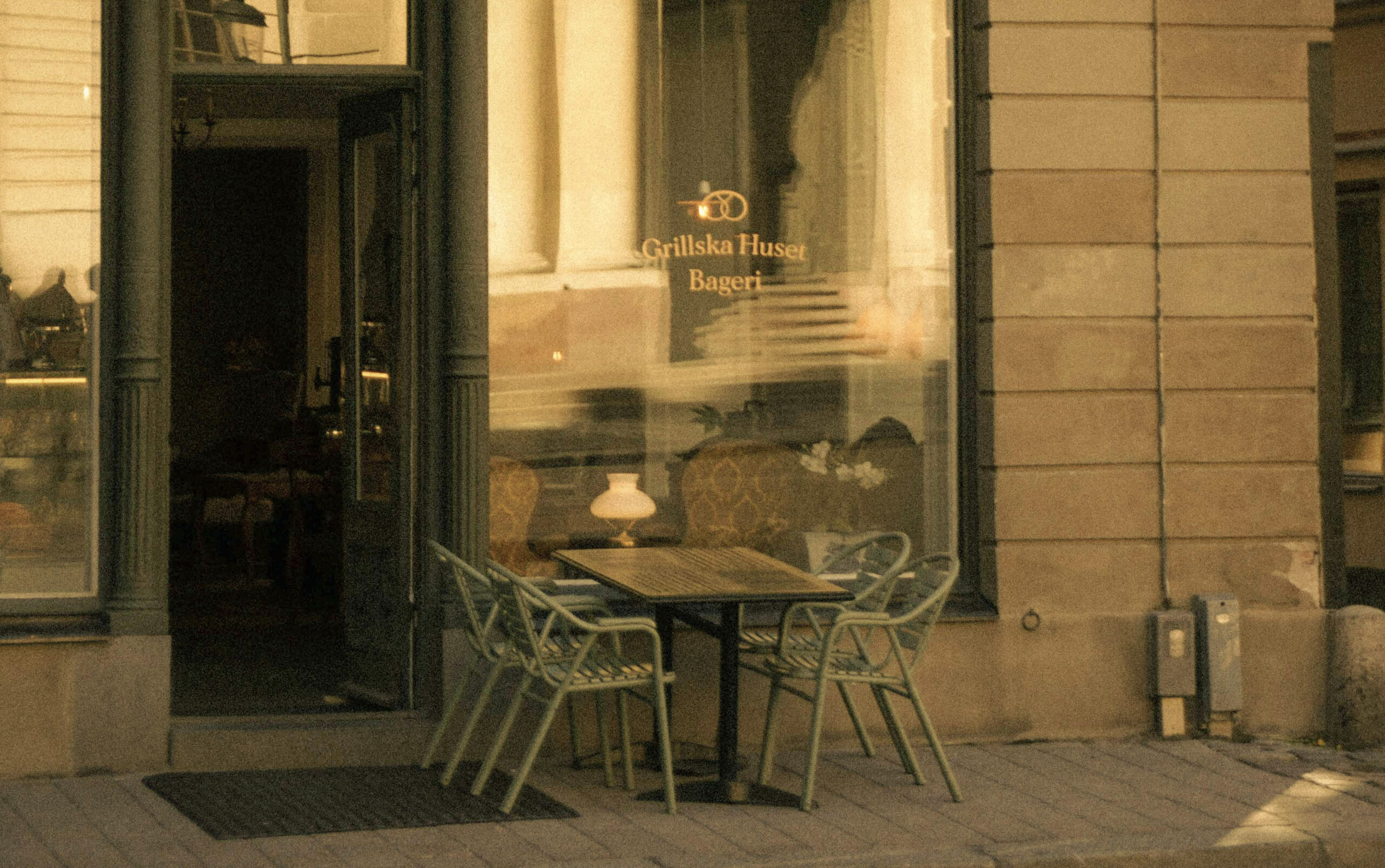
Grillska Huset, before the first customer of the day.
Streets Built to Human Scale
One of the most noticeable qualities of many European streets is surprisingly easy to overlook.
They are comfortable for the human body.
In Copenhagen, Bologna, Ghent or Kraków, streets often feel navigable at walking speed. Buildings are close enough to create enclosure but not so tall that they overwhelm. Doorways remain visible. Windows feel connected to the street below.
Nobody appears to be rushing. Someone stops to exchange a few words outside a bakery. Another person lingers by a bookshop window. Even those simply crossing the street seem to walk at a pace that leaves room for small interruptions.
A person standing outside a bakery can observe half a dozen small events within a few minutes: someone carrying bread home, a neighbour stopping for conversation, a cyclist waiting at a corner.
There is room to pause without standing in the way, to greet a neighbour, or to sit outside with a coffee before continuing the day.
You rarely notice the moment your pace begins to change. It simply happens. A street feels comfortable enough to linger on, and without thinking, you stay a little longer.
It usually isn’t in front of the most famous building.
More often, it happens on a street where the scale feels right. Where the pavement is wide enough to pause. Where the distance between buildings creates a sense of ease.
“A good street invites people to stay, not simply pass through.”
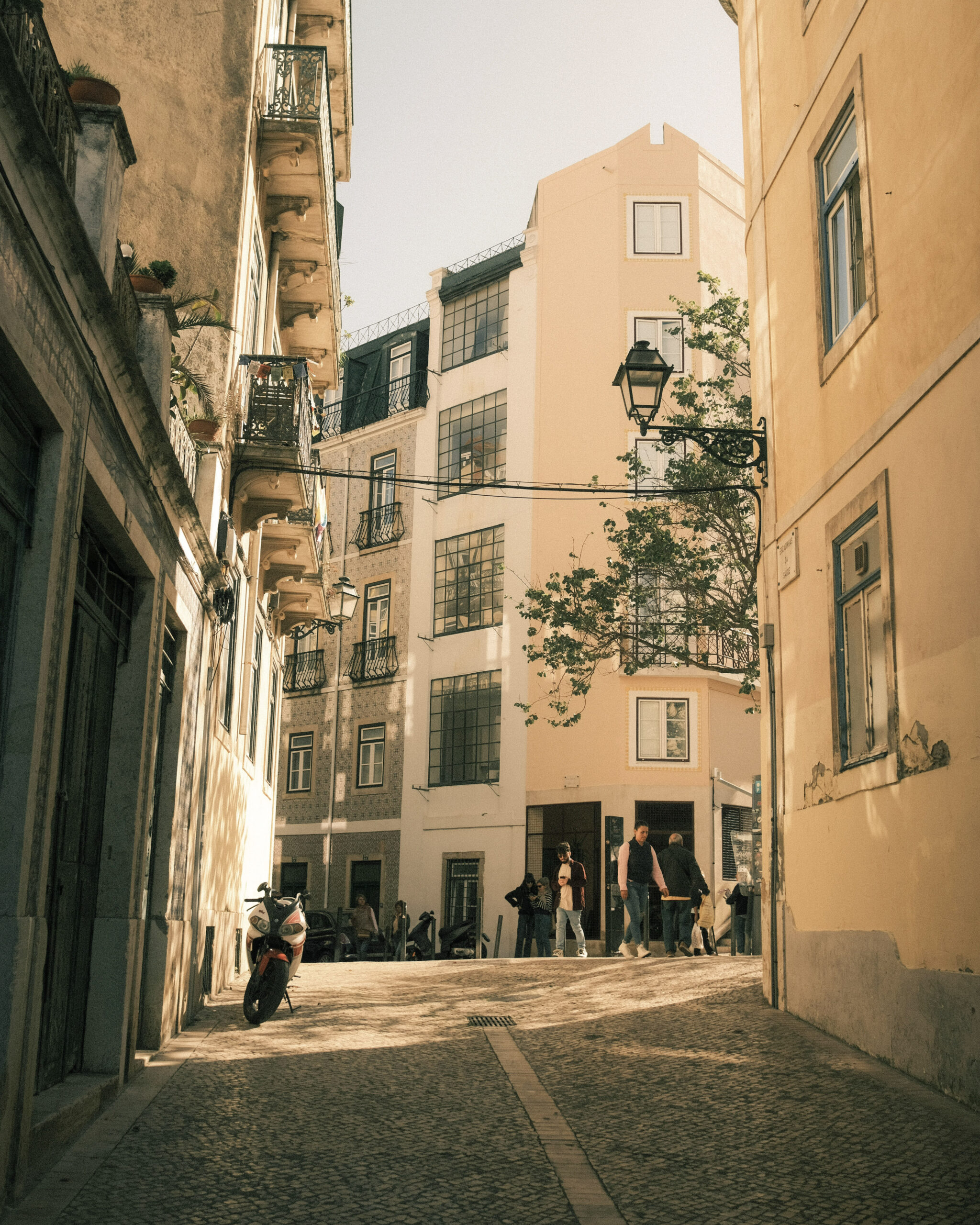
A corner in Lisbon, somewhere between two errands.
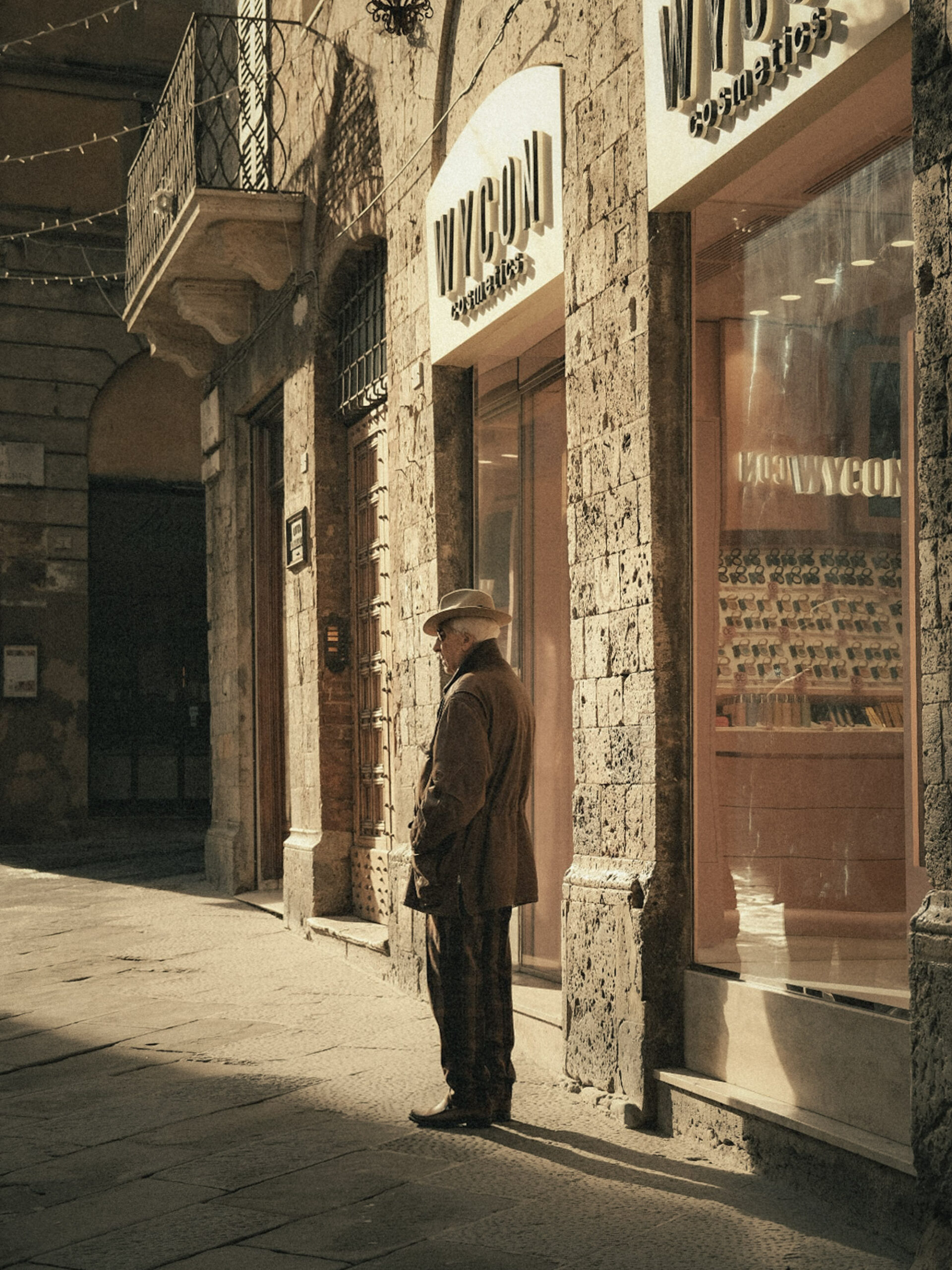
An old man pauses outside a shop that opens in ten minutes.
What Age Quietly Teaches
In Lisbon, decorative tiles are often worn smooth near entrances.
Not everywhere.
Only where generations of residents have stepped while entering and leaving their homes.
In Vienna, brass door handles are darker where thousands of hands have touched the same surface. In old Italian towns, stone steps become gently hollowed at the centre.
A threshold becomes smooth because people keep coming home. A door handle darkens because it is used without thought, day after day, year after year.
When visiting older neighbourhoods, many people look at the façades. Yet the details that stay with us are often much smaller: a doorway worn smooth at its edge, a staircase hollowed gently at the centre, a window latch polished by thousands of hands, or a corner where passing shoulders have softened the wall over decades.
These changes were never intentional. They appeared one ordinary day at a time.
The Value of Streets That Leave Space
On a quiet street in northern Italy, you can sometimes hear a spoon being placed on a café saucer from across the square.
Footsteps. A conversation drifting down from an open window on the second floor, half a sentence at a time. A bicycle crossing old paving stones, then gone. The brief creak of shutters, somewhere behind you, opening for no one in particular.
No one is asking you to photograph any of it.
A waiter refolds a napkin that didn’t need refolding. A dog waits by a door it has waited by before. Two chairs, still damp from the morning, angled toward each other as if someone had only just stood up.
The square holds still long enough for you to notice you’ve stopped checking your phone.
A window left open on a warm morning, a watering can waiting beside a doorway, or a neatly folded newspaper outside a café before it opens. A city’s values rarely announce themselves. More often, they become visible through the quiet habits repeated every day.
A city often tells the truth about itself in the moments when nothing appears to be happening.
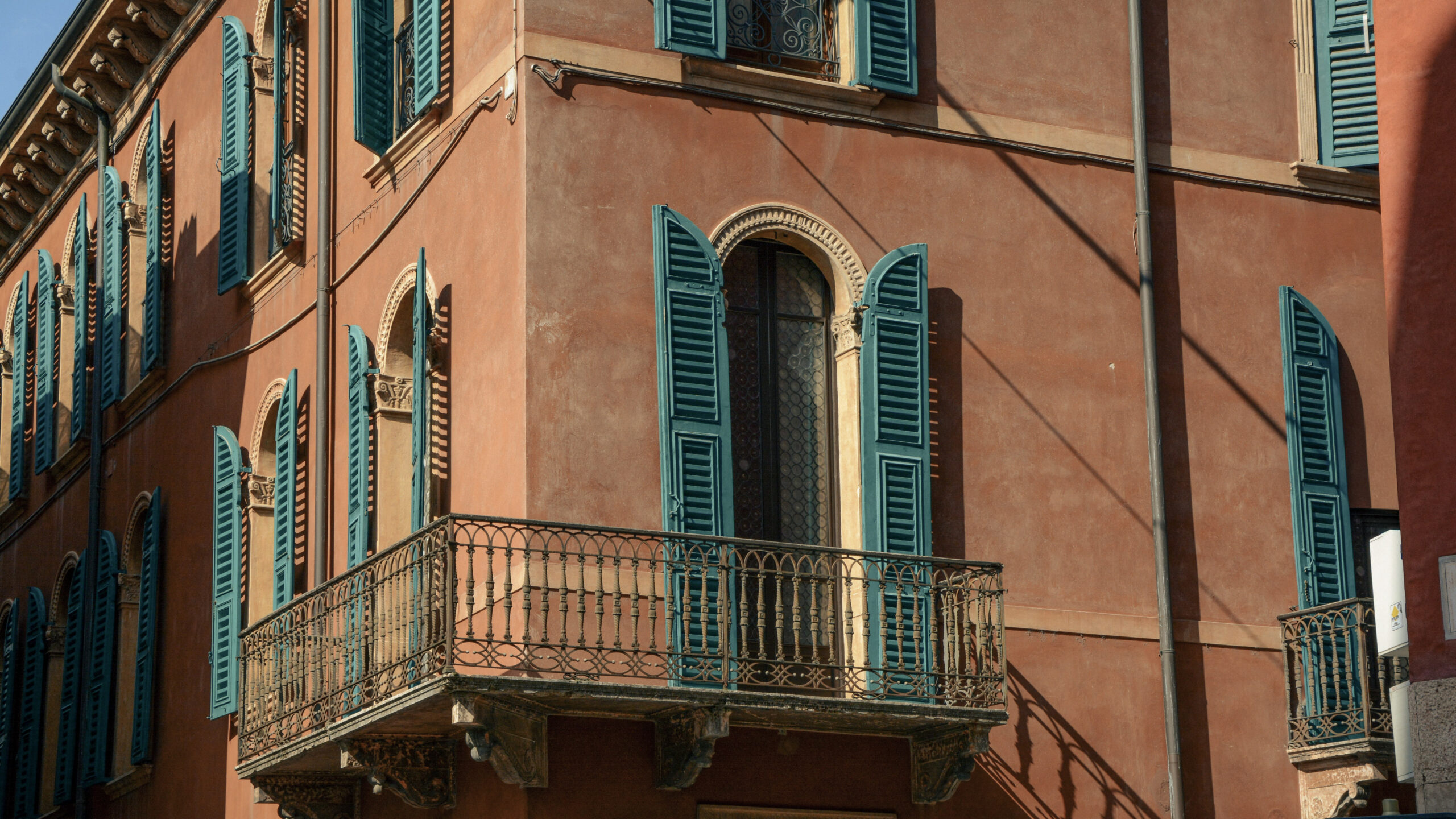
Verona. The shutters have been this colour longer than anyone remembers.
The Streets That Stay With Us
Years later, people rarely remember entire itineraries. They remember fragments.
A bakery with its light already on before the rest of the street wakes. A green door, a bicycle leaning against it in exactly the same spot, morning after morning. A stationery shop with handwritten signs curling slightly at the edges. A small square where two women stop mid-sentence to let a cyclist pass, then simply continue where they left off.
None of this survives a single photograph taken at the right angle, at the right hour.
It survives instead in pieces — days later, an ocean away, unannounced.
Studio Vela Reflection
The city begins long after the landmarks end.
Somewhere, right now, a shutter is being raised for perhaps the six hundredth time this year, by someone who stopped counting long ago. A cat resettles into a patch of sun that has shifted three feet since morning. A woman waters a single geranium on a windowsill too narrow for anything larger, and does not look up while she does it.
The street does not know any of this is being watched.
A door left slightly open. A chair pulled a few inches from its table. No one left to say why.
-
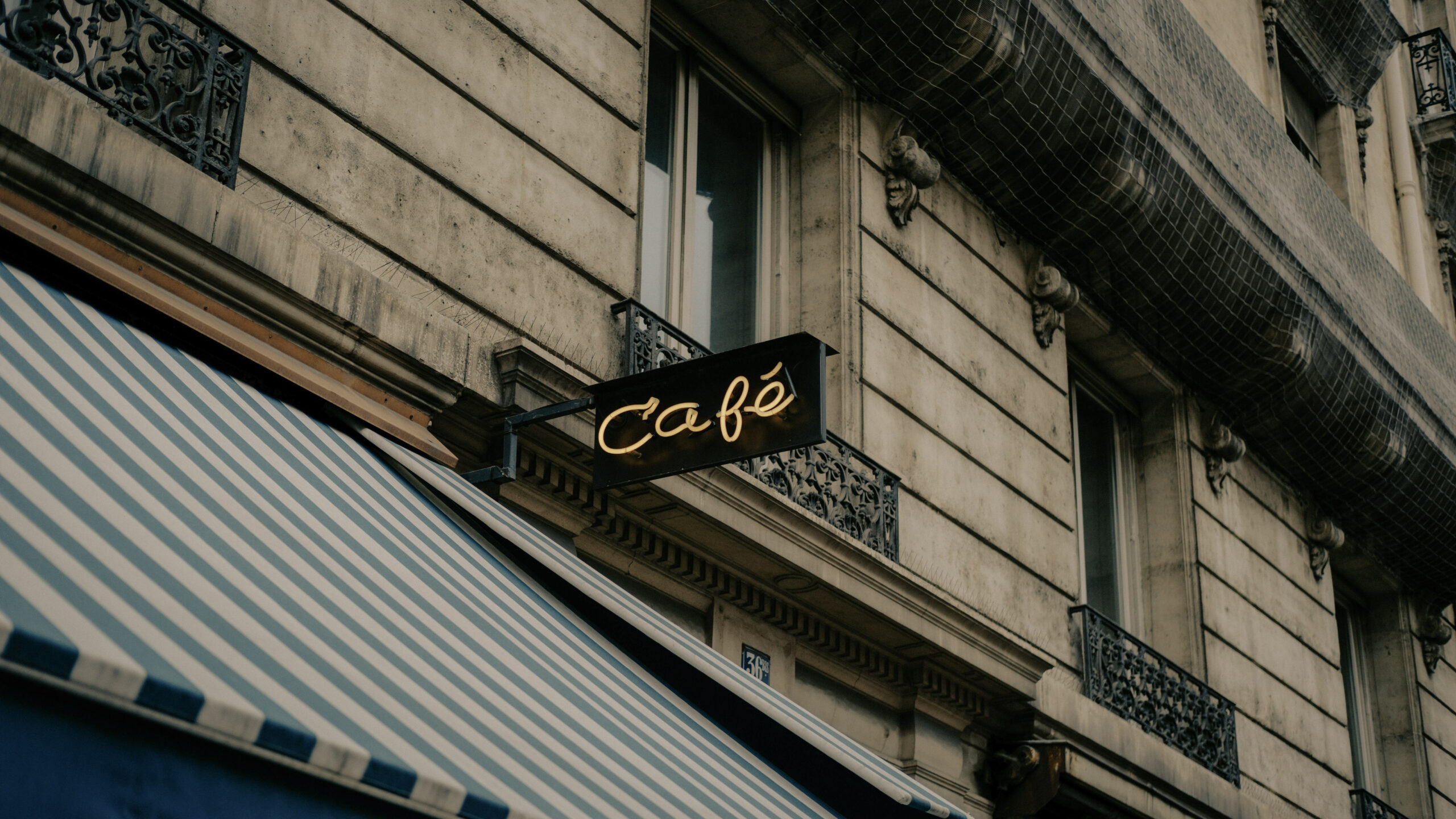
At the Café Table
Read story → : At the Café TableThe coffee is almost beside the point. A quiet editorial essay about choosing a table, watching…
-
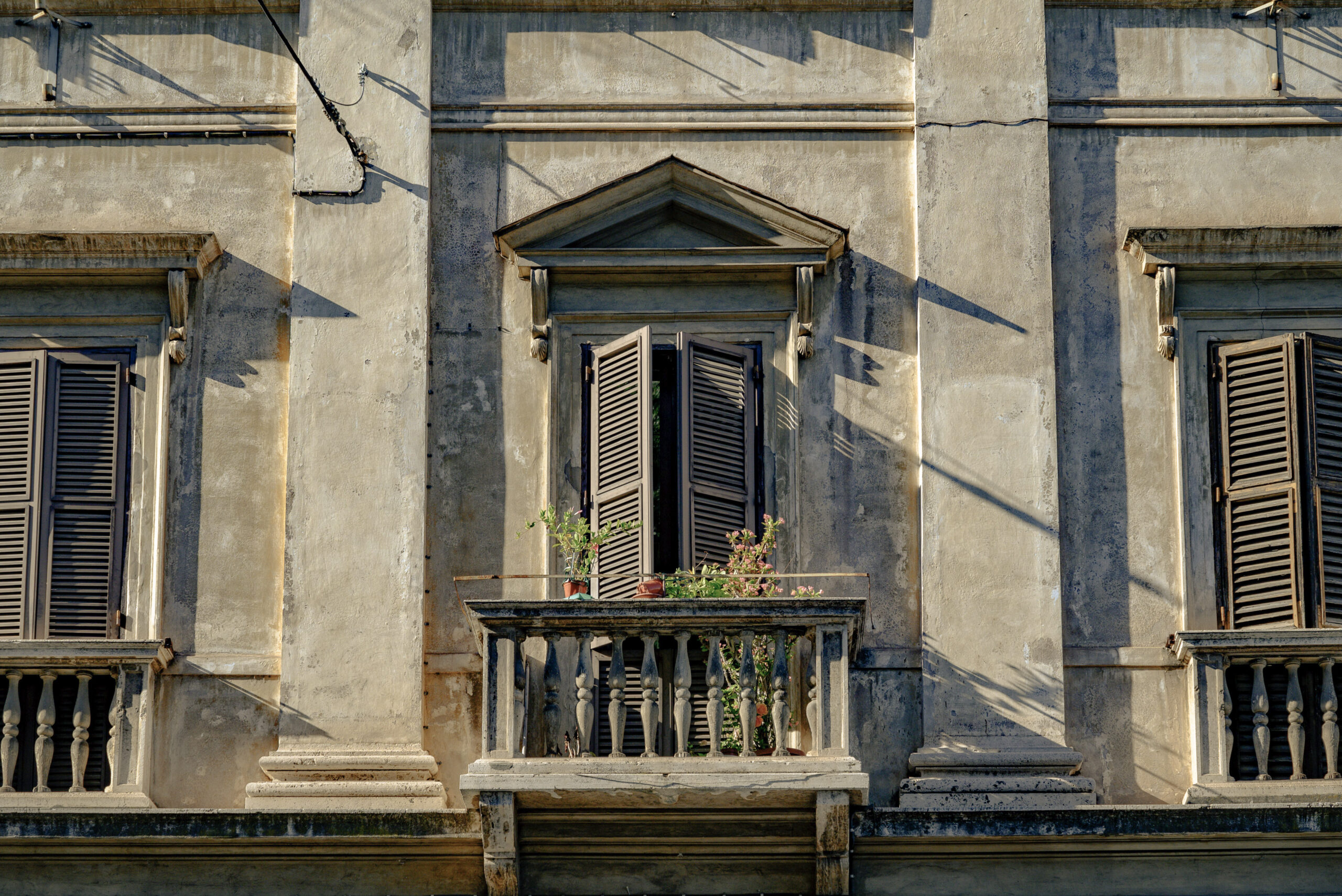
The Open Window
Read story → : The Open WindowEvery morning, the same window opens before the street is fully awake. A quiet observation on…